Mobile Accessories Guide
All
Mobile Accessories Guide
power bank

Mobile Accessories Guide

Why Your Cable Breaks Near the Connector First (And How to Prevent It)

Cables usually fail near the connector because repeated bending, pulling, and twisting concentrate stress where the internal conductors enter the plug, causing hidden strand breaks before any visible damage appears. This article explains the early warning signs, why heat and loose contacts accelerate failure, and simple habits that extend USB-C cable life.

Jan 13,2026

Why Your Cable Breaks Near the Connector First (And How to Prevent It)

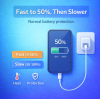
Why Your Phone Charges Fast to 50% Then Slows Down

Phones charge quickly to around 50% because they can safely accept higher current at low battery levels, then slow down as they approach 80% to 100% to reduce heat and protect long-term battery health. This article explains the charging curve and the key factors that make the slowdown more noticeable, including temperature, cable quality, and battery age.

Jan 7,2026

Why Your Phone Charges Fast to 50% Then Slows Down

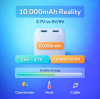
The "10,000mAh" Power Bank That Only Feels Like 6,000mAh

The same power bank can charge two phones at very different speeds because fast-charging protocols, port capability (USB-C vs USB-A), cable resistance, battery temperature, and starting percentage all change how much power a phone will accept. This article explains the real reasons and offers a quick method to isolate the bottleneck.

Jan 7,2026

The

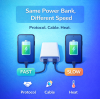
Why Your Power Bank Charges Your Friend’s Phone Faster Than Yours

The same power bank can charge two phones at very different speeds because fast-charging protocols, port capability (USB-C vs USB-A), cable resistance, battery temperature, and starting percentage all change how much power a phone will accept. This article explains the real reasons and offers a quick method to isolate the bottleneck.

Jan 6,2026

Why Your Power Bank Charges Your Friend’s Phone Faster Than Yours

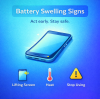
Why Phone Batteries Swell: Early Signs and Real Causes

Phone battery swelling is usually caused by gas buildup inside the cell, often accelerated by heat, charging stress, physical damage, or low-quality replacement batteries. This article explains early warning signs like a lifting screen or uneven back cover, and outlines what to do immediately to reduce safety risk.

Jan 5,2026

Why Phone Batteries Swell: Early Signs and Real Causes

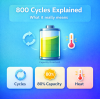
Battery Cycle Life Explained: What "800 Cycles" Really Means

Battery cycle life measures energy throughput over time, not how many times you plug in a charger. This guide explains what a “cycle” really means, why “800 cycles” is usually tied to a remaining-capacity threshold, and how heat and charging habits can make real-world lifespan vary widely.

Jan 4,2026

Battery Cycle Life Explained: What

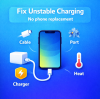
How to Fix Unstable Charging Without Replacing Your Phone

Unstable charging usually comes from one weak link in the system: cable, connector fit, port debris, heat throttling, charger output, or software triggers. This guide shows a step-by-step way to isolate variables, restore stable charging, and know when the phone port likely needs service.

Dec 31,2025

How to Fix Unstable Charging Without Replacing Your Phone

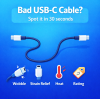
How to Spot a Bad USB-C Cable in 30 Seconds

Many USB-C cables look identical, but low-quality ones often show quick warning signs. This article shares a 30-second checklist to spot bad cables by connector wobble, weak strain relief, poor jacket consistency, early heat, and unclear ratings, helping you avoid unstable charging and early failure.

Dec 29,2025

How to Spot a Bad USB-C Cable in 30 Seconds

USB-C PD Explained: How Fast Charging Negotiation Really Works

USB-C PD fast charging is controlled by a negotiation between the charger and the phone, with the cable and port acting as key limits. This article explains PD profiles, why E-Marker and cable current rating matter, and how heat and connector condition can cause charging to slow down or fluctuate.

Dec 26,2025

USB-C PD Explained: How Fast Charging Negotiation Really Works

GaN Chargers Explained: When They Help, When They Do Not

GaN chargers can be smaller and run cooler, helping maintain stable output under load, especially for travel and multi-port charging. This article explains what GaN changes inside a charger and why charging speed still depends on device protocols, power limits, and cable capability.

Dec 25,2025

GaN Chargers Explained: When They Help, When They Do Not

Fast Charging Cables: What Actually Changes Inside the Cable

Two smartphone batteries can share the same capacity rating yet perform very differently in daily use. This article explains how cell quality, aging behavior, heat control, and system compatibility shape real battery performance beyond the numbers.

Dec 23,2025

Fast Charging Cables: What Actually Changes Inside the Cable

Why Two Smartphone Batteries With the Same Capacity Perform Differently

Two smartphone batteries can share the same capacity rating yet perform very differently in daily use. This article explains how cell quality, aging behavior, heat control, and system compatibility shape real battery performance beyond the numbers.

Dec 17,2025

Why Two Smartphone Batteries With the Same Capacity Perform Differently

Why Your “Fast Charging Cable” Still Doesn't Fast Charge Your Phone

A fast charging cable alone cannot unlock fast charging. The charger, phone, power bank, temperature, and charging protocols all decide whether your device can charge at full speed.

Dec 15,2025

Why Your “Fast Charging Cable” Still Doesn't Fast Charge Your Phone

Why Your Phone Battery Drops 20% Overnight — Even on Airplane Mode

Your phone battery can drop 10–20% overnight even in airplane mode due to aging cells, background processes, active sensors, temperature changes, and rising internal resistance.

Dec 2,2025

Why Your Phone Battery Drops 20% Overnight — Even on Airplane Mode