Why Phone Batteries Swell: Early Signs and Real Causes
- Share
- Issue Time
- Jan 5,2026
Summary
Phone battery swelling is usually caused by gas buildup inside the cell, often accelerated by heat, charging stress, physical damage, or low-quality replacement batteries. This article explains early warning signs like a lifting screen or uneven back cover, and outlines what to do immediately to reduce safety risk.
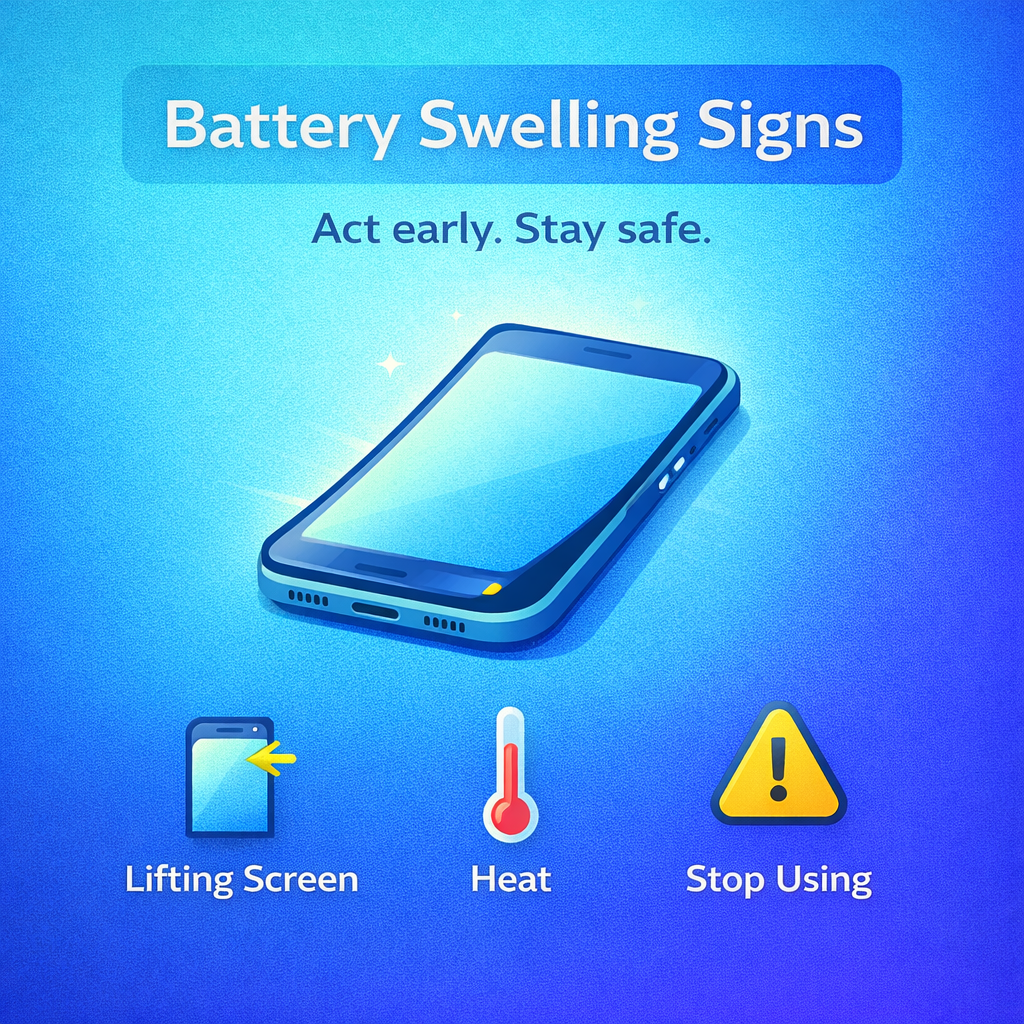
Why Phone Batteries Swell: Early Signs and Real Causes
Battery swelling looks simple from the outside, but the causes are usually a mix of chemistry, heat, and stress over time. The key is to recognize early signs and stop using the battery before damage spreads.
What Swelling Means
Swelling often indicates gas buildup inside the cell. It is a safety signal, not a cosmetic issue.
Most Common Accelerator
Heat speeds up unwanted reactions and increases stress, especially during charging and heavy use.
What "Swelling" Actually Is
A swollen battery is usually a battery that has produced gas inside the cell. As gas builds up, the pouch or casing expands. This is not cosmetic. It is a safety signal that the battery is no longer behaving normally.
Early Warning Signs People Ignore
Swelling rarely appears overnight. Common early signs include a phone that no longer sits flat on a table, a screen that lifts slightly, a back cover that separates, or buttons that feel tighter. Some people also notice unusual warmth during charging, or a battery that drops faster than usual. If you see physical deformation, treat it as urgent.
| Early Sign | What It Often Looks Like | Why It Matters |
|---|---|---|
| Phone does not sit flat | Slight rocking on a table | Physical deformation may be starting |
| Screen lifting | Edge gap or raised corner | Internal pressure is increasing |
| Back cover separating | New gap along the seam | Battery expansion may be pushing parts |
| Unusual warmth | Hotter than normal during charging | Heat accelerates aging and gas generation |
| Fast battery drop | Noticeably shorter runtime | Capacity loss can accompany instability |
Heat Is The Biggest Accelerator
Heat speeds up unwanted chemical reactions inside lithium batteries. Charging in hot environments, gaming while charging, leaving a phone in a car, or using thick cases that trap heat can all increase stress. Over time, repeated high temperature exposure raises the risk of gas generation and swelling.
Simple Risk Pattern
Fast charging is not automatically harmful, but fast charging plus heat is a common aging combination.
Other Causes That Raise Risk
Modern phones have protection circuits, so classic overcharging is not the main cause for most users. However, low-quality chargers, unstable cables, and repeated charging under high heat can push the battery into stressful conditions. Physical damage from drops or crushing can also harm internal layers, and low-quality replacement batteries may increase failure risk months later due to inconsistent materials and production control.
What To Do If You Suspect Swelling
Stop using the device or battery. Do not puncture it. Do not squeeze it. Avoid charging it. If the screen is lifting, do not press it back down. Use a professional repair service or proper recycling route. A swollen lithium battery should be handled carefully and not stored near heat.
Battery swelling is not something to wait and see. Recognizing the first physical changes and reducing heat stress are the most practical ways to lower risk.
To explore battery and charging solutions designed for stable daily performance, visit