Why Your Cable Breaks Near the Connector First (And How to Prevent It)
- Share
- Issue Time
- Jan 13,2026
Summary
Cables usually fail near the connector because repeated bending, pulling, and twisting concentrate stress where the internal conductors enter the plug, causing hidden strand breaks before any visible damage appears. This article explains the early warning signs, why heat and loose contacts accelerate failure, and simple habits that extend USB-C cable life.
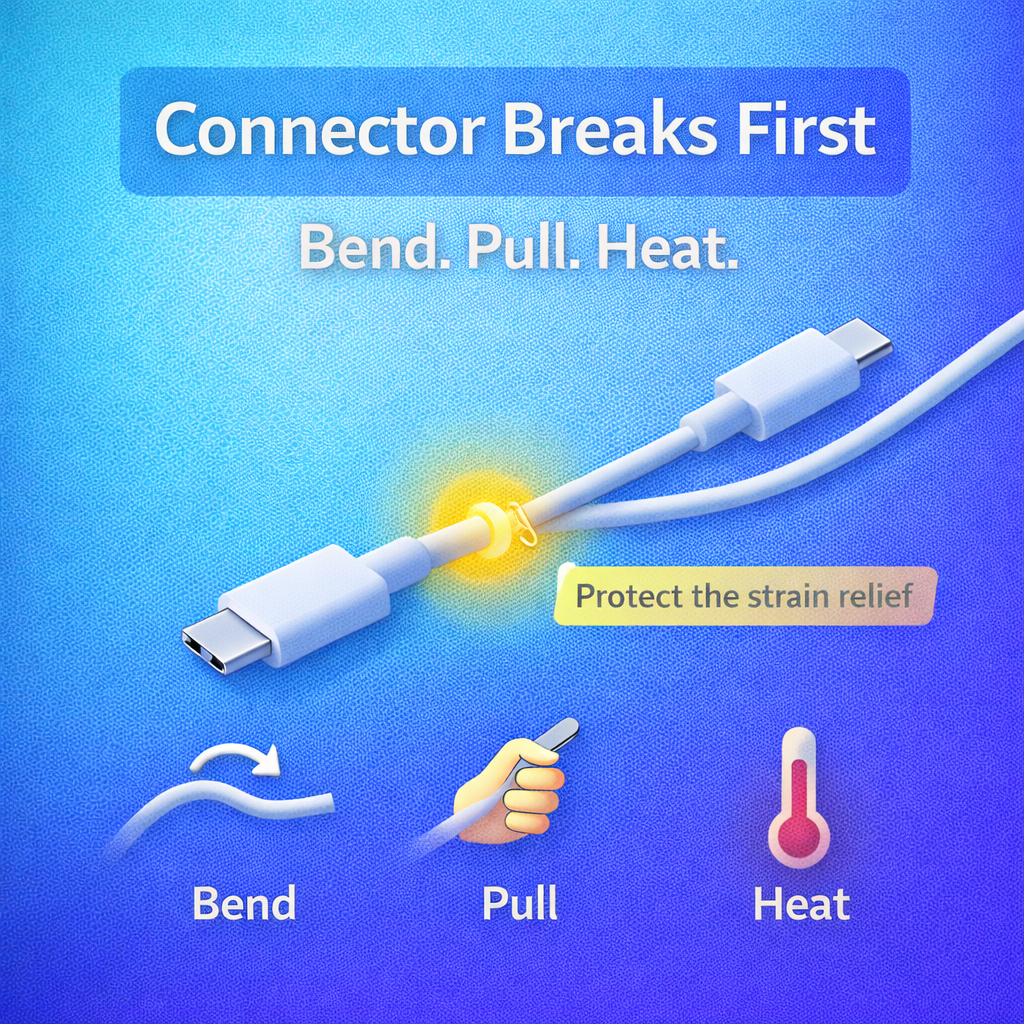
Why Your Cable Breaks Near the Connector First (And How to Prevent It)
If your cable always fails near the connector, that is not bad luck. It is the most stressed part of the cable. The connector zone is where bending, pulling, and twisting concentrate, and where tiny internal failures start long before the cable looks damaged.
What Breaks First
The connector zone fails early because daily bending and pulling concentrate stress right where the internal conductors enter the plug.
What Helps Most
Better strain relief, gentler bends, and unplugging by the connector head extend cable life more than any "hack".
The Connector Area Is a Mechanical Stress Hotspot
Every time you plug in, unplug, or use your phone while charging, the cable bends near the connector. Repeated bending creates fatigue in the internal conductors, especially if the strain relief is short or stiff. Over time, strands crack and charging becomes unstable.
Internal Damage Usually Starts Before You See It
Many cables look fine outside while the inside is already failing. The first symptoms are often disconnects when the cable moves, charging that changes with cable angle, and data transfer that becomes unreliable before charging fails completely.
| Early Symptom | What It Usually Means | Quick Check |
|---|---|---|
| Disconnects when you move the cable | Broken strands near the connector | Hold the connector still and compare stability |
| Slow charging that changes with angle | Resistance or intermittent contact | Try the same cable on another device |
| Data transfer becomes unreliable first | Signal lines failing before power lines | Test file transfer or car audio connection |
Heat Makes Weak Spots Fail Faster
The connector zone can run warmer because current is concentrated and contact resistance can rise if the plug is slightly loose or dirty. Heat accelerates wear. A cable that is "almost failing" often becomes obviously bad during fast charging.
Tight Bends, Pocket Stress, and Car Charging Are Cable Killers
Sharp bends around cases or desk edges, stuffing a plugged-in cable into a pocket or bag, and constant movement during car charging all repeatedly stress the connector zone.
Prevention That Actually Works
Unplug by the connector head, keep a gentle bend near the phone, avoid twisting while charging, and choose cables with longer, softer strain relief.
When You Should Replace The Cable Immediately
Replace the cable if you see exposed wire, cracking jacket, discoloration near the connector, connector wobble, overheating, a burnt smell, or frequent disconnects triggered by small movements. A failing cable can increase heat and create unstable charging.
A cable usually dies at the connector because that is where physics attacks it every day. Treat that zone gently, and your cables last much longer.
For reliable USB-C cables built for daily bending and stable charging, visit