power bank
All
Mobile Accessories Guide
power bank

power bank

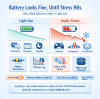
Why Your Phone Battery Drops Faster in Cold Weather

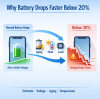
Phone batteries often drain faster in cold weather because low temperatures slow lithium battery chemistry, increase internal resistance, and cause voltage to drop more quickly under load. This can lead to rapid battery percentage loss, unstable battery readings, and even unexpected shutdowns, especially in older batteries.

Mar 13,2026

Why Your Phone Battery Drops Faster in Cold Weather

What Causes Battery Swelling in Everyday Phone Use

Battery swelling in everyday phone use is usually caused by a combination of chemical aging, heat, charging stress, and sometimes physical damage. As gas builds up inside a stressed battery cell over time, the battery expands, creating both performance and safety risks.

Mar 12,2026

What Causes Battery Swelling in Everyday Phone Use

How Battery Heat Builds Up During Everyday Charging

Battery heat during everyday charging builds up gradually through electrical resistance, internal power conversion, phone activity, and battery aging. Even normal charging can generate heat over time, and repeated high temperatures may increase long-term battery wear.

Mar 11,2026

How Battery Heat Builds Up During Everyday Charging

Why Some Power Banks Charge Phones Faster Than Wall Chargers

Some power banks can charge smartphones faster than wall chargers because charging speed depends on power output, protocol compatibility, and device communication. Modern power banks often support multiple fast-charging standards and higher output levels, allowing them to deliver faster charging than basic wall chargers in certain situations.

Mar 10,2026

Why Some Power Banks Charge Phones Faster Than Wall Chargers

Why Your Phone Charges Faster With a Short Cable

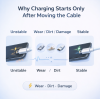
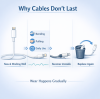
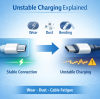
Short charging cables can sometimes charge smartphones faster because they introduce less electrical resistance. Lower resistance reduces voltage drop and allows more stable power delivery from the charger to the device. However, cable quality, conductor thickness, and connector design also play important roles in fast charging performance.

Mar 9,2026

Why Your Phone Charges Faster With a Short Cable

Why Some Power Banks Lose Half Their Capacity in Real Use

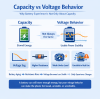
This article explains why the real usable capacity of a power bank is often lower than its labeled capacity. Factors such as voltage conversion, circuit efficiency, cable resistance, and heat loss all reduce the energy that can actually be delivered to a smartphone during charging.

Mar 5,2026

Why Some Power Banks Lose Half Their Capacity in Real Use

PD vs PPS Fast Charging: What Is the Real Difference

This article explains the difference between PD and PPS fast charging technologies. It highlights how PD uses fixed voltage steps while PPS enables dynamic voltage adjustment, which can improve charging efficiency and reduce heat in compatible devices.

Mar 4,2026

PD vs PPS Fast Charging: What Is the Real Difference

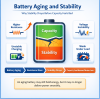
Does Fast Charging Damage Phone Batteries Over Time

This article explores whether fast charging damages phone batteries over time, explaining that heat management, charging control systems, and daily usage habits play a more significant role in battery aging than peak wattage alone.

Mar 3,2026

Does Fast Charging Damage Phone Batteries Over Time

Understanding Charging Protocol Negotiation in Simple Terms

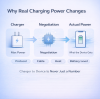
This article explains charging protocol negotiation in simple terms, showing how chargers and devices communicate to determine safe voltage and current levels. It clarifies why charging speed changes during a session and how compatibility affects stability and battery health.

Mar 2,2026

Understanding Charging Protocol Negotiation in Simple Terms

USB-C Cable Ratings Explained: What 3A and 5A Actually Mean

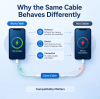
This article explains what 3A and 5A USB-C cable ratings actually mean, how current capacity affects charging speed and stability, and why choosing the right cable depends on charger output, device protocol, and overall compatibility.

Mar 1,2026

USB-C Cable Ratings Explained: What 3A and 5A Actually Mean

PD vs PPS Explained Simply: Which One Is Better for Daily Charging

PD and PPS are both fast charging technologies, but they behave differently in daily use. This article explains how fixed power steps in PD compare with dynamic adjustment in PPS, and why PPS often delivers more stable charging with lower heat for everyday use.

Feb 28,2026

PD vs PPS Explained Simply: Which One Is Better for Daily Charging

Why Some Chargers Make Touchscreens Go Crazy

Some chargers can cause “ghost touches” and erratic scrolling because of poor power quality. Electrical noise (ripple), weak isolation/filtering, unstable grounding, and voltage swings from low-quality cables can interfere with the touchscreen controller, especially as the phone warms up while charging. This article explains the real causes and gives quick tests to identify whether the charger, cable, or wall outlet is the culprit.

Feb 2,2026

Why Some Chargers Make Touchscreens Go Crazy

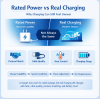
Charger Wattage Myths: 65W Is Not Always Better for Phones

A 65W charger is not automatically faster for phones because wattage is only a maximum capability. Real speed depends on whether the charger supports the phone’s preferred fast-charging protocol (USB-C PD or PD PPS), the cable’s current rating, the battery’s charging stage, and thermal throttling when the phone or charger gets hot. This article explains why some lower-watt chargers can feel faster in real use and how to choose a charger that stays stable and cool.

Jan 27,2026

Charger Wattage Myths: 65W Is Not Always Better for Phones

Why 20W Feels Slower Than 18W: Fast-Charge Negotiation in Plain English

A 20W charger can feel slower than 18W because wattage is only a maximum. Real fast-charging speed depends on protocol negotiation between the phone and charger, cable resistance, battery charge stage, and thermal throttling when the phone gets hot. This article explains the handshake logic and a quick test to identify the real bottleneck.

Jan 23,2026

Why 20W Feels Slower Than 18W: Fast-Charge Negotiation in Plain English