The End of Swelling: A B2B Deep Dive into Semi-Solid State Technology for Mobile Batteries
- Share
- Issue Time
- Jun 25,2026
Summary
Discover how semi-solid state battery technology is solving the mobile repair industry's biggest nightmare: thermal swelling. This technical blog provides B2B sourcing managers with a deep dive into material stability, thermal management, and a guide to identifying genuine semi-solid cells to reduce RMA rates and protect brand reputation.
Technical Insight | 2026
The End of Swelling: A B2B Deep Dive into Semi-Solid State Technology for Mobile Batteries
1. Physical Stability: Moving from Liquid to Matrix
The "swelling" or bloating of traditional lithium-ion batteries is a chemical side effect where the liquid electrolyte vaporizes under high temperatures or over-charge cycles. This generates gases (CO2, CH4) that physically expand the aluminum pouch.
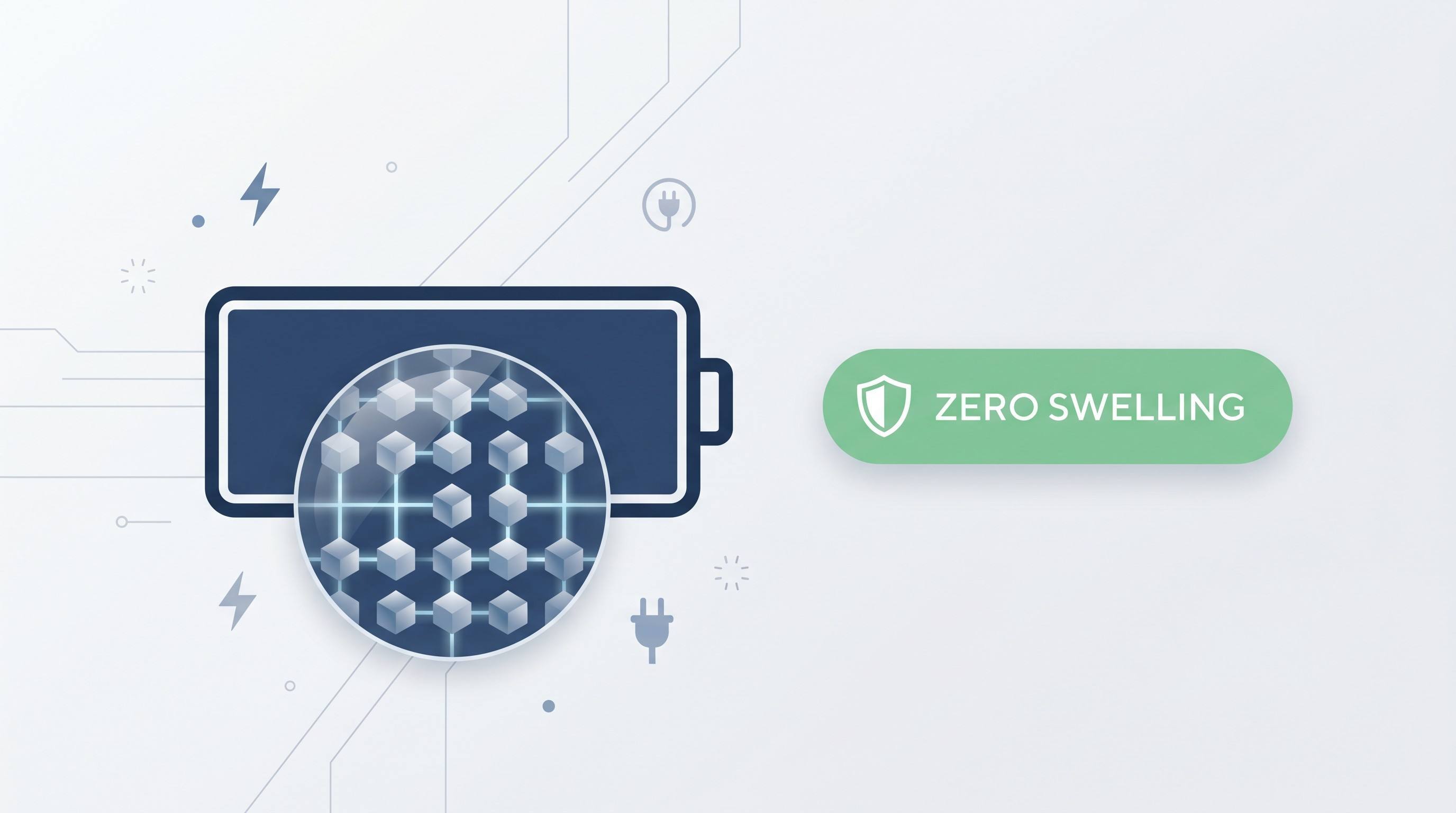
The Semi-Solid Advantage: By mixing nano-scale solid electrolyte oxides into the liquid electrolyte, the material stability is drastically increased. Even under extreme thermal conditions, this solid-matrix structure inhibits gas generation, ensuring the battery retains its original thin dimensions after hundreds of cycles.
2. Solving Thermal Management in the 100W+ Era
As 2026 flagship models standardize 67W to 120W fast-charging, traditional liquid cells face massive internal heat stress. Semi-solid state cells possess lower internal resistance and superior thermal stability, typically maintaining a peak temperature 5°C to 8°C lower than liquid-only solutions. For wholesalers, this translates to fewer heat-related customer complaints and significantly longer shelf-life.
B2B Sourcing Guide: Identifying Genuine Semi-Solid Cells
- Mechanical Toughness: Higher resistance to punctures and crushing compared to standard cells.
- Cycle Consistency: A significantly flatter capacity retention curve beyond 500 fast-charging cycles.
- Low Self-Discharge: Superior voltage retention during long-term ocean freight and storage.
3. Strategic Adoption: Which Models Need It Most?
For distributors looking to build a high-quality reputation in 2026, we recommend prioritizing semi-solid state technology for three categories:
- Ultra-Thin Flagships: Where even 0.1mm of swelling can lift and crack a premium OLED screen.
- High-Wattage Devices: Models supporting 67W+ charging that face heavy thermal management pressure.
- Premium Repair Kits: Establishing a "zero-swelling" service tier to lock in corporate repair contracts.
2026 Technical Resource Center
Seeking technical datasheets or cycle-life benchmarks for the new semi-solid state replacement series?
Request Technical Datasheet