IATA Introduces New Passenger Recommendations on Power Bank Use and Charging in the Cabin
- Share
- Issue Time
- Mar 18,2026
Summary
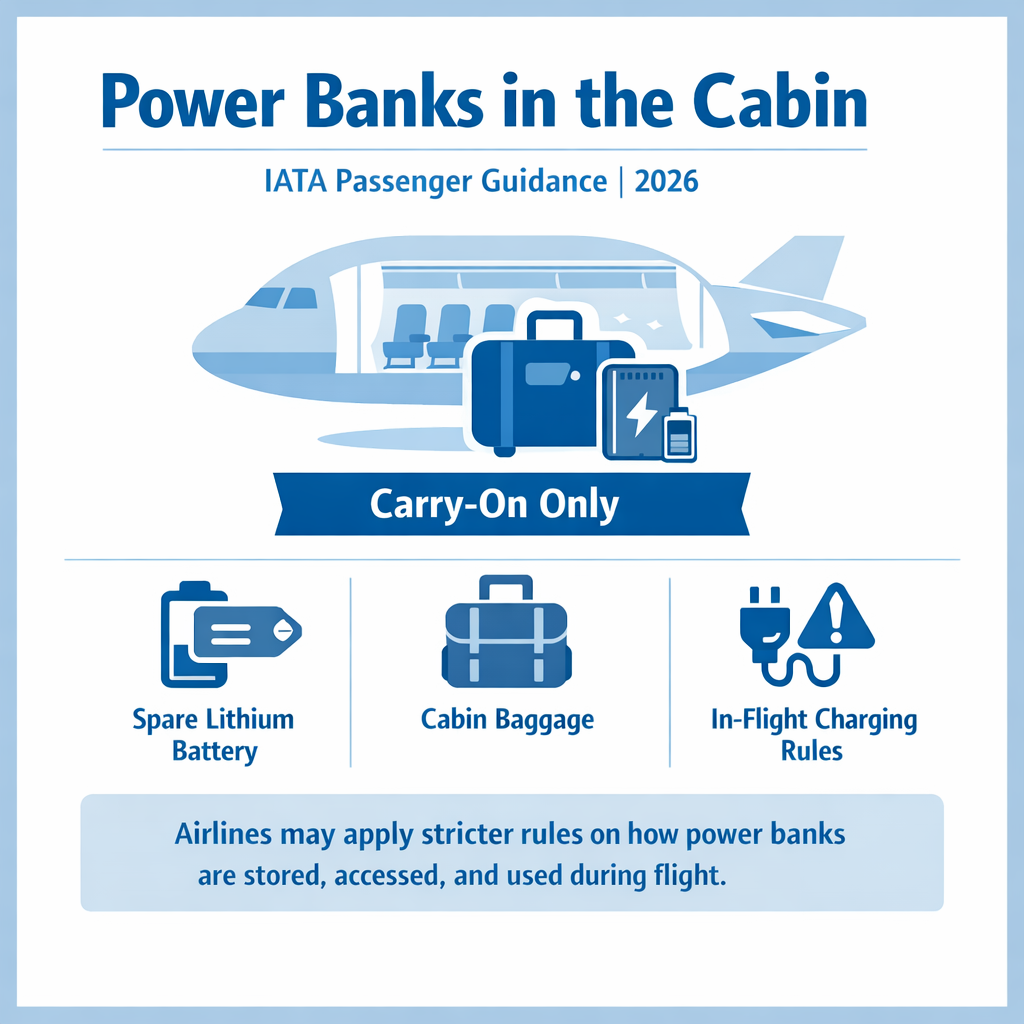
IATA’s 2026 dangerous goods update cycle places stronger emphasis on how passengers carry and use power banks in the cabin. Power banks remain classified as spare lithium batteries and must stay in cabin baggage, while updated guidance also highlights in-flight charging behavior, device accessibility, and airline-level safety controls related to lithium battery risks.
IATA Introduces New Passenger Recommendations on Power Bank Use and Charging in the Cabin
In the 2026 dangerous goods update cycle, IATA highlighted new passenger-facing recommendations related to the use of power banks and the charging of portable electronic devices in the aircraft cabin.
The guidance reflects a stronger operational focus on how lithium battery devices are handled during flight, especially when passengers carry spare batteries or power banks in personal baggage.
Topic: Passenger recommendations for power banks and lithium battery devices
Core area: Cabin carriage, in-flight handling, and charging behavior
Industry relevance: Aviation safety, travel guidance, and portable power compliance
Power Banks Remain Cabin-Carry Items
IATA materials make clear that power banks are treated as spare lithium batteries. Because of that classification, they must be carried in cabin baggage rather than checked baggage.
While this principle is not entirely new, the 2026 guidance places added emphasis on how these devices are managed inside the cabin environment.
Why In-Cabin Charging Behavior Matters More Now
One of the important practical themes in the updated guidance is that operators may apply stricter controls over how passengers use battery-powered devices and power banks during the flight.
Updated recommendations connected to charging portable electronic devices and batteries in the cabin reflect the aviation sector’s continuing concern about lithium battery thermal events.
| Area | Why It Matters |
|---|---|
| In-Flight Charging | Charging behavior in the cabin may influence airline safety procedures. |
| Device Accessibility | Battery devices may need to remain easy to access and monitor during travel. |
| Airline Policy Variation | Carriers may translate IATA recommendations into their own operating rules. |
| Thermal Event Prevention | Updated advice reflects ongoing efforts to reduce cabin battery-related incidents. |
What This Means for Travelers
For passengers, carrying a power bank is no longer only about watt-hour limits and quantity rules. It increasingly involves how the device is stored, whether it remains accessible, and whether in-flight charging behavior aligns with airline safety expectations.
- Keep power banks in cabin baggage, not checked baggage
- Check airline-specific rules before departure
- Be aware that in-flight charging practices may be more tightly controlled
- Store battery devices in a way that supports safe access and handling
Why This Matters for Portable Power Brands
For the portable power industry, the significance is broader than passenger convenience. Updated in-cabin recommendations can influence product labeling, airline communication, travel guidance content, and customer education around safe transport and use.
Manufacturers and brands selling power banks may increasingly need to explain not only capacity and output, but also travel-safe handling and regulatory classification.
A Wider Shift in Battery Safety Communication
The broader message from IATA is that lithium battery safety is no longer limited to cargo declarations and shipping cartons. It also extends into the cabin environment, where passenger-carried battery products must be managed in a way that reduces operational risk.
As power banks remain a common travel accessory, this area is becoming more visible in aviation safety communication.