EU Advances Carbon Footprint Methodology for Batteries Placed on the EU Market
- Share
- Issue Time
- Mar 12,2026
Summary
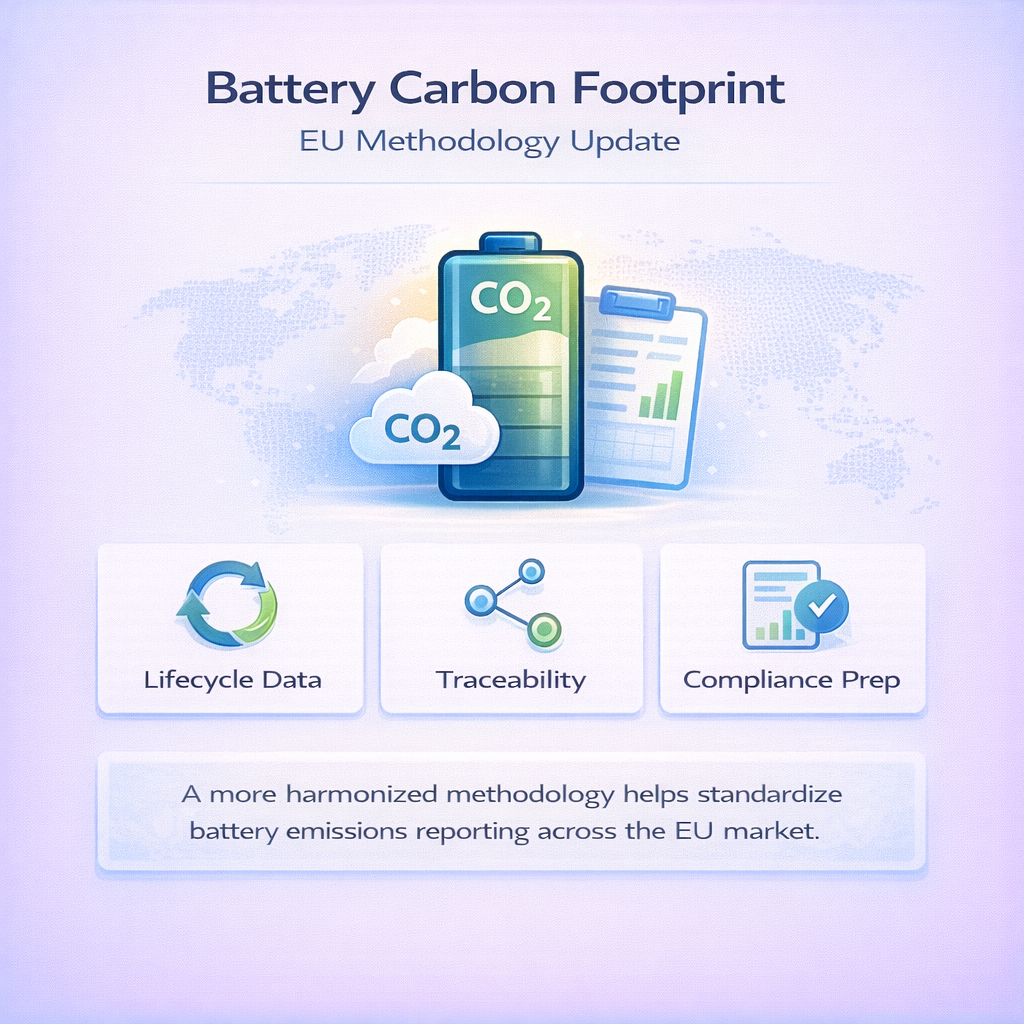
The EU is moving toward more standardized carbon footprint reporting for batteries placed on the European market. The methodology supported by the European Commission’s Joint Research Centre helps create a more consistent way to measure battery-related emissions, which may affect lifecycle analysis, supplier traceability, and future compliance preparation under the EU battery regulatory framework.
EU Advances Carbon Footprint Methodology for Batteries Placed on the EU Market
The European Commission’s Joint Research Centre (JRC) has published methodological support work for calculating the carbon footprint of industrial batteries placed on the EU market. As battery sustainability requirements continue to evolve in Europe, carbon footprint reporting is becoming a more practical compliance topic for manufacturers and supply-chain participants.
This methodological development sits within the wider implementation environment of the EU Battery Regulation, where traceability, sustainability, and lifecycle-based requirements are becoming increasingly important for battery products sold in the European market.
Topic: Battery carbon footprint methodology
Institution: European Commission Joint Research Centre (JRC)
Regulatory context: EU Battery Regulation implementation environment
Core relevance: Sustainability reporting, lifecycle analysis, and compliance readiness
Why Carbon Footprint Reporting Matters
Carbon footprint reporting is becoming one of the most closely watched areas of battery regulation because it turns sustainability into a measurable indicator. Instead of broad policy language alone, manufacturers may increasingly face structured expectations related to emissions data, lifecycle analysis, and production transparency.
Production stages and energy use become part of measurable environmental reporting.
Raw materials and supplier data may play a larger role in sustainability documentation.
Battery evaluation increasingly extends beyond product performance into full lifecycle impact.
What the Methodology Supports
According to the JRC framework, the purpose of the methodology is to support a more harmonized way of assessing greenhouse gas emissions linked to batteries. This can reduce inconsistency in how companies calculate and report carbon footprint data across different products and supply chains.
| Area | Practical Meaning |
|---|---|
| Emission Assessment | Provides a structured basis for greenhouse gas calculation across battery production chains |
| Method Consistency | Helps reduce differences in reporting approaches used by companies and suppliers |
| Compliance Preparation | Supports future alignment with EU sustainability and market-access expectations |
| Lifecycle Data Use | Encourages stronger integration of sourcing, production, and logistics data |
Why This Matters for Battery and Power Product Companies
For manufacturers and battery supply-chain participants, the significance of carbon footprint methodology extends well beyond environmental messaging. It can affect how data is collected, how suppliers report information, and how internal compliance teams prepare technical documentation.
- Production data collection systems
- Supplier disclosure and traceability records
- Lifecycle analysis workflows
- Internal sustainability documentation
This is particularly relevant for businesses involved in portable power products, battery packs, and related energy accessories, where future EU compliance trends may increasingly depend on structured sustainability data.
A Shift From Policy Language to Technical Requirements
The broader significance of this development is that battery regulation in Europe is moving from general policy direction toward measurable technical requirements. As methods and reporting systems become more mature, carbon footprint evaluation is likely to become a more practical part of regulatory readiness and sustainability assessment.
That makes this methodology important not only for large industrial battery manufacturers, but also for companies watching future compliance expectations in portable energy and rechargeable product categories.