IATA Updates Lithium Battery Transport Guidance for Airlines
- Share
- Issue Time
- Mar 6,2026
Summary
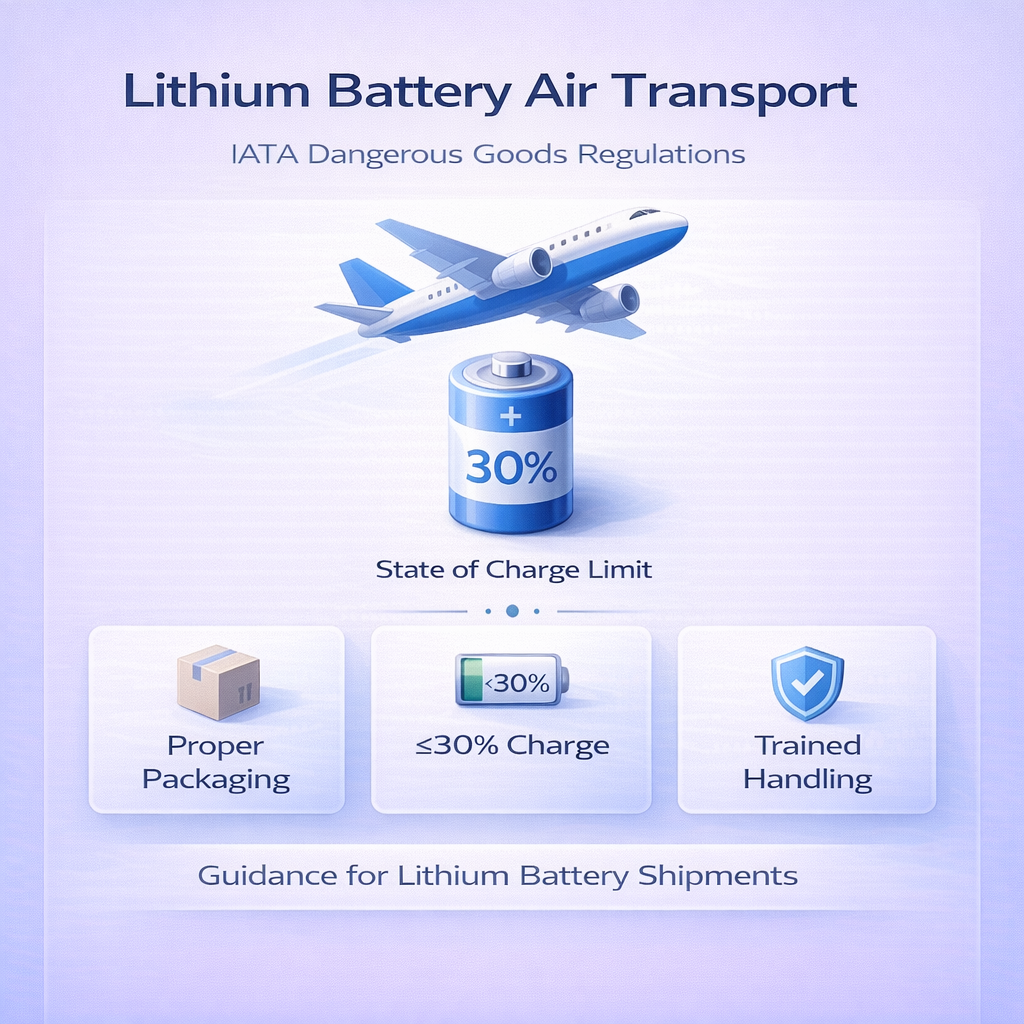
In March 2026, the International Air Transport Association (IATA) released updated guidance on lithium battery air transport. The update emphasizes packaging safety, staff training, and maintaining lithium-ion batteries at a state of charge of 30% or lower to reduce transportation risks.
IATA Updates Lithium Battery Transport Guidance for Airlines
In March 2026, the International Air Transport Association (IATA) released updated guidance related to the air transport of lithium batteries. The update aims to improve operational safety and clarify handling procedures for airlines transporting lithium battery shipments.
Lithium batteries are widely used in smartphones, laptops, power banks, and many portable electronics. Because of potential safety risks such as overheating or short circuits, their transport by air is strictly regulated.
Organization: International Air Transport Association (IATA)
Topic: Lithium Battery Air Transport Safety Guidance
Framework: IATA Dangerous Goods Regulations (DGR)
Focus: Packaging, State of Charge limits, operational safety
Background of Lithium Battery Air Transport Rules
Lithium batteries are classified as dangerous goods in international aviation due to the possibility of overheating, thermal runaway, or short circuits. To manage these risks, air transport follows the IATA Dangerous Goods Regulations (DGR).
These regulations apply to multiple shipment types, including standalone batteries and batteries packed with electronic devices.
Lithium batteries shipped separately
Batteries installed in devices
Batteries packaged with devices
Key Updates Highlighted by IATA
The updated guidance focuses on improving operational clarity and reinforcing existing safety practices in lithium battery transport.
| Area | Updated Guidance |
|---|---|
| Packaging Standards | Lithium batteries must be packaged to prevent damage or short circuits during transport. |
| State of Charge | Lithium-ion batteries shipped by air are recommended to remain at ≤30% state of charge. |
| Operational Training | Cargo staff must be trained to identify and safely handle lithium battery shipments. |
| Safety Awareness | Airlines should maintain strict operational awareness when transporting battery cargo. |
Impact on Electronics and Logistics Industries
Lithium batteries are a core component of modern consumer electronics and portable power devices. As demand for smartphones, power banks, and portable electronics grows globally, safe air transportation becomes increasingly important.
Manufacturers, exporters, and logistics providers must ensure compliance with IATA guidance to avoid shipment delays, safety incidents, or regulatory violations.
- Improved packaging for lithium battery shipments
- Compliance with Dangerous Goods Regulations
- Training programs for cargo handling staff
- Monitoring of battery shipment state of charge
The updated IATA guidance reinforces the importance of standardized safety procedures in lithium battery air transport. As battery-powered devices continue to grow across global markets, maintaining strict compliance with aviation safety standards remains essential.
For more information about portable power solutions and charging accessories, visit:
https://www.janonpowerbank.com