EU Releases New Battery Passport Implementation Guidelines
- Share
- Issue Time
- Mar 5,2026
Summary
The European Commission released updated guidance in March 2026 for implementing the EU Battery Passport under Regulation (EU) 2023/1542. The system aims to improve battery traceability, lifecycle transparency, and sustainability data across the EU battery supply chain.
EU Releases New Battery Passport Implementation Guidelines
In March 2026, the European Commission released updated guidance related to the implementation of the upcoming EU Battery Passport framework, a key component of the EU Battery Regulation (EU) 2023/1542.
The Battery Passport system aims to improve transparency, traceability, and sustainability information throughout the lifecycle of batteries placed on the European Union market.
Regulator: European Commission
Topic: Battery Passport implementation guidance
Framework: EU Battery Regulation (EU) 2023/1542
Focus: Traceability, sustainability, and lifecycle transparency
Background of the EU Battery Regulation
The EU Battery Regulation (EU) 2023/1542 was introduced to modernize how batteries are regulated across the European Union. The regulation introduces new requirements covering sustainability, product safety, labeling, and lifecycle management.
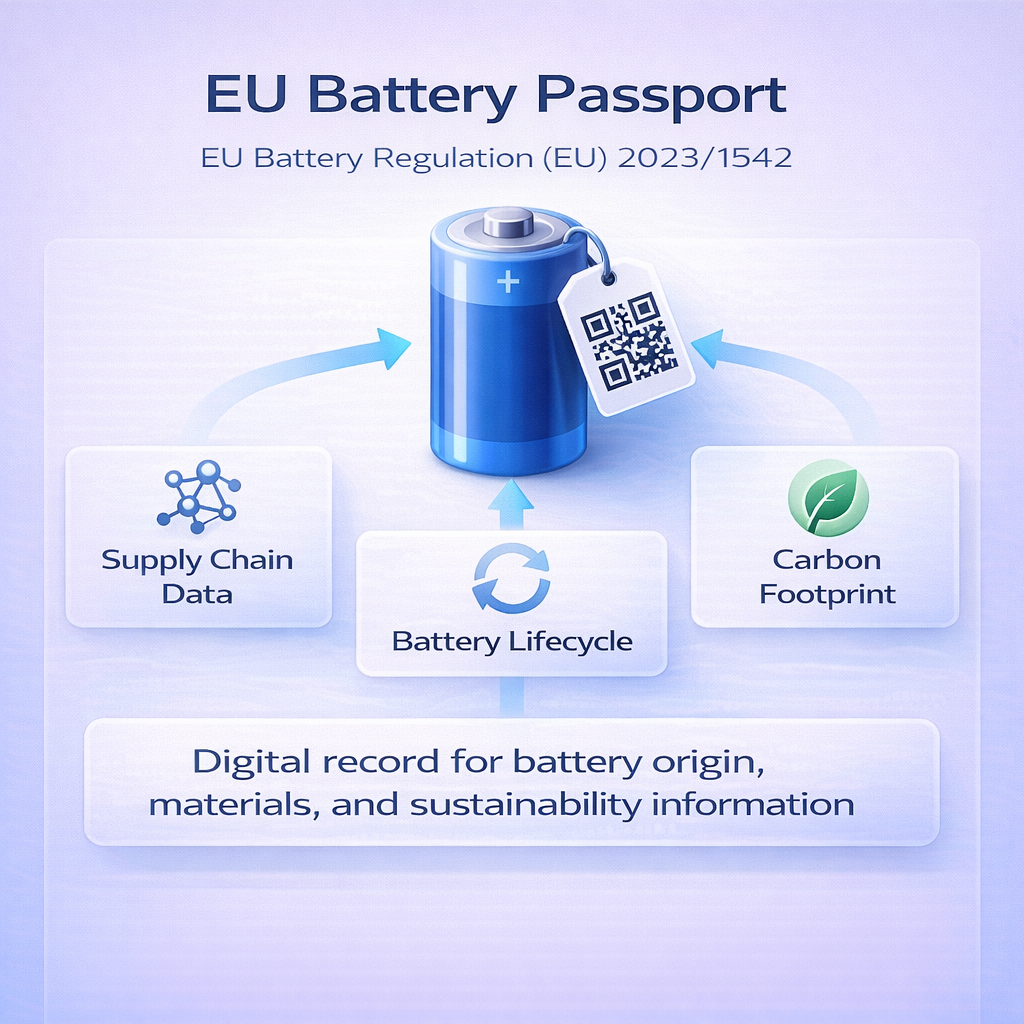
One of the most important innovations within the regulation is the creation of the Battery Passport, a digital record containing structured information about a battery's origin, composition, performance, and environmental footprint.
Improves access to battery lifecycle information
Tracks materials and manufacturing origins
Supports EU environmental goals
Key Elements of the Implementation Guidance
According to the European Commission, the updated guidance clarifies several technical aspects of how the Battery Passport system will operate.
| Area | Explanation |
|---|---|
| Data Structure | Standardized digital records describing battery characteristics and lifecycle information |
| Digital Access | Information may be accessed through digital systems such as QR codes or online databases |
| Supply Chain Traceability | Manufacturers must maintain records about materials, production, and lifecycle data |
| Environmental Data | Carbon footprint, recycled content, and sustainability indicators |
Timeline for Implementation
Under the EU Battery Regulation framework, the Battery Passport system is expected to be introduced gradually over the coming years. Manufacturers placing batteries on the EU market will need to comply with digital traceability requirements as the regulation enters different implementation phases.
- Improved battery lifecycle data collection
- Digital traceability infrastructure
- Supply chain transparency
- Environmental reporting systems
Industry Implications
The Battery Passport system represents a significant shift in how battery supply chains are documented and regulated. Companies involved in battery manufacturing, distribution, and recycling may need to develop new digital infrastructure to comply with these transparency requirements.
At the same time, the system supports the EU’s broader sustainability strategy by encouraging better lifecycle management and responsible resource use.
The updated Battery Passport guidance released by the European Commission represents an important step toward implementing the EU Battery Regulation framework. As the new requirements gradually take effect, manufacturers and suppliers will need to prepare for greater transparency and traceability across the battery lifecycle.
For more information about portable power solutions and charging accessories, visit:
https://www.janonpowerbank.com