Regulators Target Misleading Smartphone Battery Claims as EU Energy Labels Go Live
- Share
- Issue Time
- Dec 26,2025
Summary
EU smartphone rules now standardise how battery lifespan and endurance information is displayed on labels, making longevity claims easier to compare and harder to exaggerate. This shift increases scrutiny on battery-related marketing and pushes brands toward clearer, more verifiable durability messaging.
Regulators Target Misleading Smartphone Battery Claims as EU Energy Labels Go Live
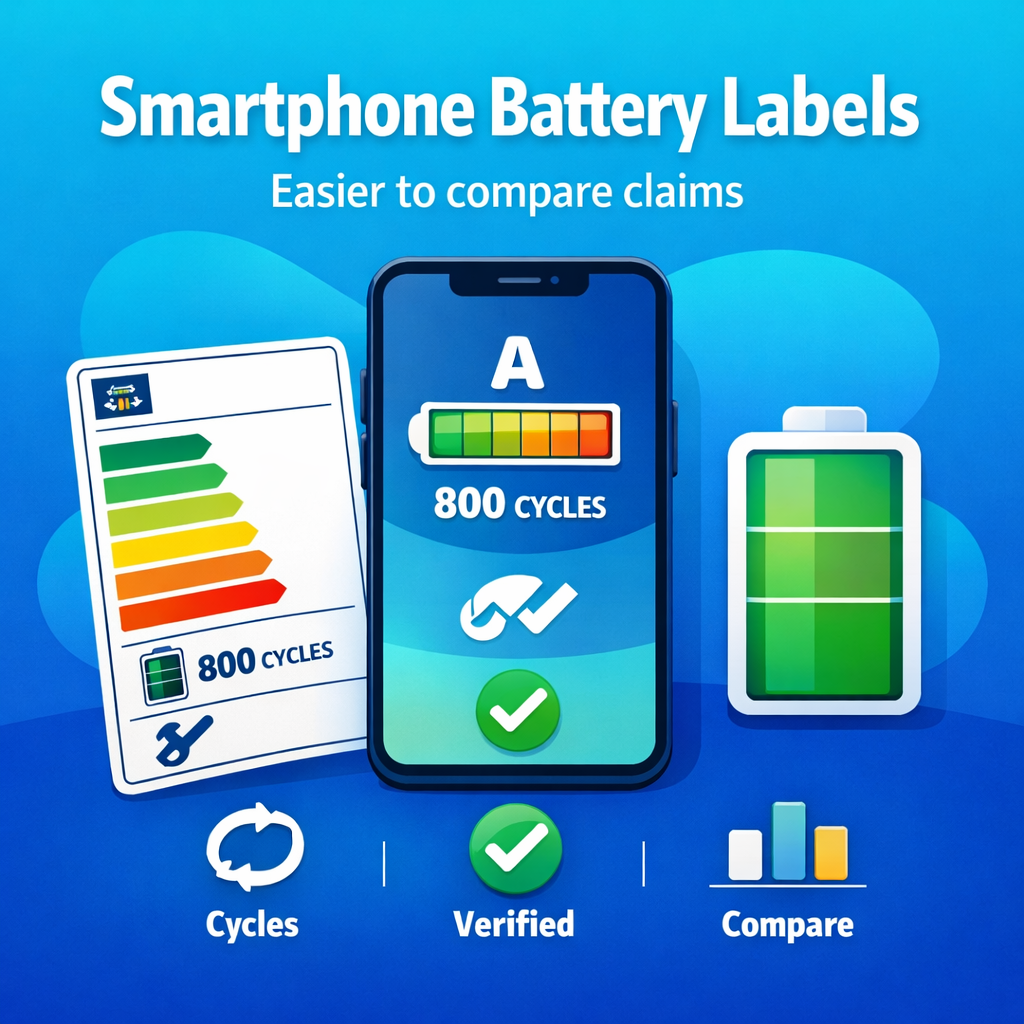
EU rules for smartphones and slate tablets are now applying, introducing a standardized labeling and design baseline aimed at making battery-related claims easier to compare and harder to inflate. From the application date, in-scope products must use the EU energy label system and comply with ecodesign requirements when placed on the EU market.
Why This Matters
Once battery durability information becomes visible at point of sale, vague longevity claims face faster scrutiny and easier comparison across brands.
What Changes
Battery-related metrics are displayed in a harmonised format, alongside durability and a repairability score for this product category.
Battery Information Becomes Standardised On The Label
The key shift for smartphone batteries is that battery-performance information is surfaced in a harmonised label format. Public summaries describe the label as showing battery-lifespan-related information alongside energy efficiency and durability indicators, and it introduces a repairability score for the category.
What Becomes Easier To Verify
Claims around battery lifespan and endurance are pushed toward consistent language, because the label is expected to align with standardised measurement logic behind the displayed ranges.
How Battery Endurance Is Framed
Under the supporting delegated rules, battery endurance in cycles is tied to a standardised test approach and a durability threshold concept. In practice, endurance is measured until remaining capacity reaches a defined level relative to rated capacity, and the resulting cycle performance is presented in predefined ranges.
| Label Visibility | What It Signals | Market Effect |
|---|---|---|
| Battery lifespan and endurance displayed | A common yardstick for durability | Less room for vague longevity claims |
| Durability and repairability indicators | Longer-life expectations become clearer | More consistent comparison at point of sale |
| Standardised measurement logic behind ranges | Reduced ambiguity in marketing language | Faster scrutiny by reviewers and surveillance |
Industry Impact: Transparency Becomes The Pressure Point
The impact is less about a single enforcement moment and more about a structural transparency shift. With a common yardstick visible at retail, battery-related claims can be checked more quickly against what is printed on the label. That changes how brands frame longevity, how reviewers benchmark devices, and how market surveillance can prioritize checks.
Over time, this visibility can compress the space for selectively framed capacity or endurance claims that are difficult to validate across models. It also nudges brands toward tighter alignment between battery design targets, declared performance ranges, and documentation discipline.
For more insights and product solutions in the phone accessories ecosystem, visit