EU Applies Battery Information and Transparency Requirements Under Regulation (EU) 2023/1542
- Share
- Issue Time
- Dec 22,2025
Summary
In 2025, the EU begins applying battery information and transparency requirements under Regulation (EU) 2023/1542 in market supervision, making battery capacity representation, performance consistency, and product identification key reference points in compliance checks.
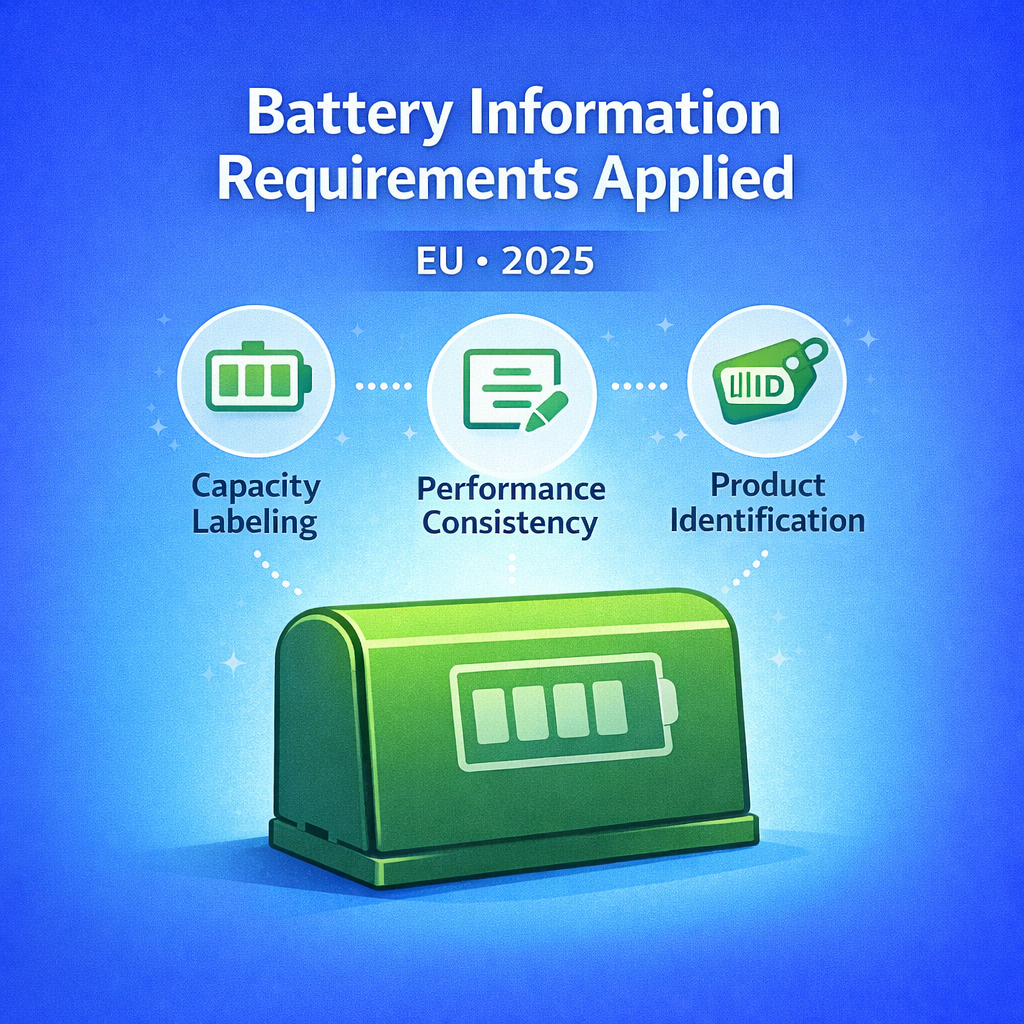
EU Applies Battery Information and Transparency Requirements Under Regulation (EU) 2023/1542
Timeline
2025 enforcement stage (market supervision application phase)
Rule Source
Regulation (EU) 2023/1542
Event Type
Mandatory application of information and transparency requirements
In 2025, battery information and transparency requirements set out under Regulation (EU) 2023/1542 begin to apply in market supervision across the European Union, marking a practical enforcement stage for battery-related products placed on the EU market.
What Authorities Check
Capacity representation, performance consistency, and product identification information, assessed for consistency, traceability, and alignment with the regulation’s information framework.
The requirements focus on how core battery information is made available and assessed, including parameters related to battery capacity representation, performance consistency, and product identification. As these provisions take effect, battery information becomes a direct reference point in compliance checks conducted by market surveillance authorities.
In practice, regulators are expected to review whether battery-related data provided with products is consistent, traceable, and aligned with the regulation’s information framework. This includes how key characteristics are communicated across documentation, labeling, and accompanying product information throughout the battery lifecycle.
With the application phase underway, the regulation’s information provisions move into active use during inspections and conformity assessments. Market surveillance authorities across EU member states are expected to reference these requirements when evaluating battery products, reflecting a shift from preparatory alignment toward operational oversight.
The 2025 application stage reinforces the role of battery information as part of the EU’s broader approach to regulating batteries, placing greater emphasis on transparency and consistency within the market environment.
For more information about battery-related technologies and compliance topics, visit