What Causes Battery Swelling in Everyday Phone Use
- Share
- Issue Time
- Mar 12,2026
Summary
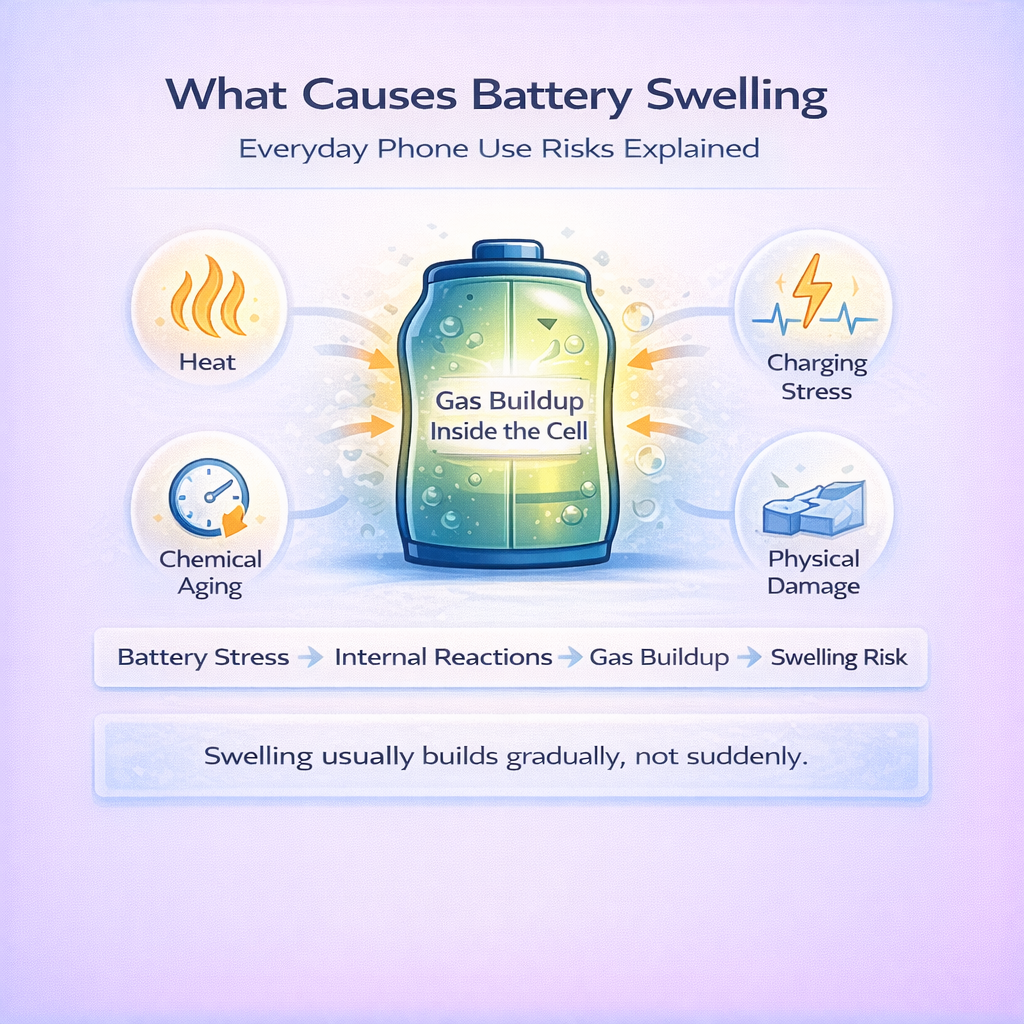
Battery swelling in everyday phone use is usually caused by a combination of chemical aging, heat, charging stress, and sometimes physical damage. As gas builds up inside a stressed battery cell over time, the battery expands, creating both performance and safety risks.
What Causes Battery Swelling in Everyday Phone Use
Battery swelling is one of the most worrying problems smartphone users can encounter. A phone back cover may start lifting slightly, the screen may separate from the frame, or the device may feel unusually thick. In most cases, this swelling does not happen suddenly. It builds gradually through a combination of chemical aging, heat, charging stress, and daily usage habits.
Understanding what causes battery swelling can help users reduce risk and extend battery life.
Battery swelling usually comes from gas buildup inside a stressed or aging battery cell. Heat, long-term charging stress, battery aging, and physical damage can all increase that risk over time.
Battery Swelling Starts Inside the Cell
Most smartphone batteries are lithium-ion or lithium-polymer cells. Inside the battery, chemical reactions store and release energy during charging and discharging.
As batteries age, those reactions become less stable. Under certain conditions, unwanted side reactions can occur and generate gas inside the battery cell. Because the battery is sealed, that gas has nowhere to go, so the battery begins to expand.
Charging and discharging reactions store and release energy safely.
Aging and stress can trigger gas generation inside the sealed cell.
Gas buildup increases pressure and causes the battery to swell.
Heat Is One of the Biggest Triggers
Heat plays a major role in battery swelling. High temperature accelerates chemical breakdown inside the battery and increases the chance of internal gas generation.
- Charging in hot environments
- Leaving the phone in direct sunlight
- Heavy gaming while charging
- Poor heat dissipation from thick phone cases
- Repeated fast charging under high thermal load
A battery that spends too much time at elevated temperature ages faster and faces greater swelling risk over time.
Overcharging Is Less Common, but Charging Stress Still Matters
Modern smartphones include charging control systems designed to prevent true overcharging. In normal conditions, the phone should stop active charging once the battery reaches its limit.
However, this does not mean charging habits no longer matter. Long exposure to high voltage near full charge, extended time plugged in at 100%, frequent fast charging with extra heat, and unstable low-quality charging accessories can all increase long-term battery stress.
| Stress Factor | How It Affects the Battery |
|---|---|
| Long Hours at 100% | Keeps the battery under high-voltage stress for extended periods |
| Frequent Fast Charging | Can increase heat and long-term chemical stress |
| Poor-Quality Chargers | May create unstable power delivery and extra battery stress |
| High Ambient Temperature | Speeds up internal degradation and gas generation risk |
Battery Aging Makes Swelling More Likely
Every rechargeable battery has a limited lifespan. As the battery goes through more charge cycles, internal resistance rises and the chemical materials become less stable.
Older batteries tend to warm up more easily during charging.
More energy is lost instead of stored efficiently.
Chemical instability makes internal gas buildup more likely.
Physical Damage Can Also Contribute
Swelling is not always caused by charging habits alone. Physical damage can weaken the battery structure and create internal problems that later lead to swelling.
- Dropping the phone
- Bending or crushing the device
- Using a battery damaged during repair
- Exposure to moisture or contamination
Warning Signs Before Severe Swelling
Battery swelling often gives visible clues before it becomes dangerous. Early signs should never be ignored.
The rear cover may rise slightly or no longer sit flat.
The display may begin separating from the frame.
The phone may feel hotter, thicker, or uneven on flat surfaces.
How Everyday Habits Affect Swelling Risk
Daily behavior can either reduce or increase battery stress. Small habits repeated over months can have a significant effect.
| Habits That Increase Risk | Habits That Help Reduce Risk |
|---|---|
| Keeping the phone at 100% for long periods | Charging in a cool, ventilated place |
| Heavy phone use while charging | Avoiding unnecessary high-heat use during charging |
| Charging under pillows or blankets | Keeping the device on hard, cool surfaces |
| Using poor-quality chargers and cables | Using certified charging accessories |
What to Do If a Battery Starts Swelling
A swollen battery should be treated as a safety issue, not just a performance issue. Users should never try to flatten it, puncture it, or continue normal charging.
Stop using the device if swelling is obvious. Do not keep charging it. Avoid putting pressure on the phone. Arrange professional inspection or battery replacement, and dispose of the damaged battery through proper recycling channels.
Conclusion
Battery swelling in everyday phone use is usually caused by a mix of chemical aging, heat, charging stress, and sometimes physical damage. It rarely comes from a single moment. More often, it is the result of repeated stress building up over time.
Understanding the causes of swelling helps users protect battery health, reduce safety risk, and make better charging decisions in daily life.
https://www.janonpowerbank.com