Built-In Plug Power Banks Explained: Are These Ultra-Portable Chargers Really Safe?
- Share
- Issue Time
- Nov 27,2025
Summary
Built-in plug power banks offer cable-free convenience, but safety depends on cell quality, connector stability, and temperature control. A well-designed plug-in power bank charges steadily and protects battery health.
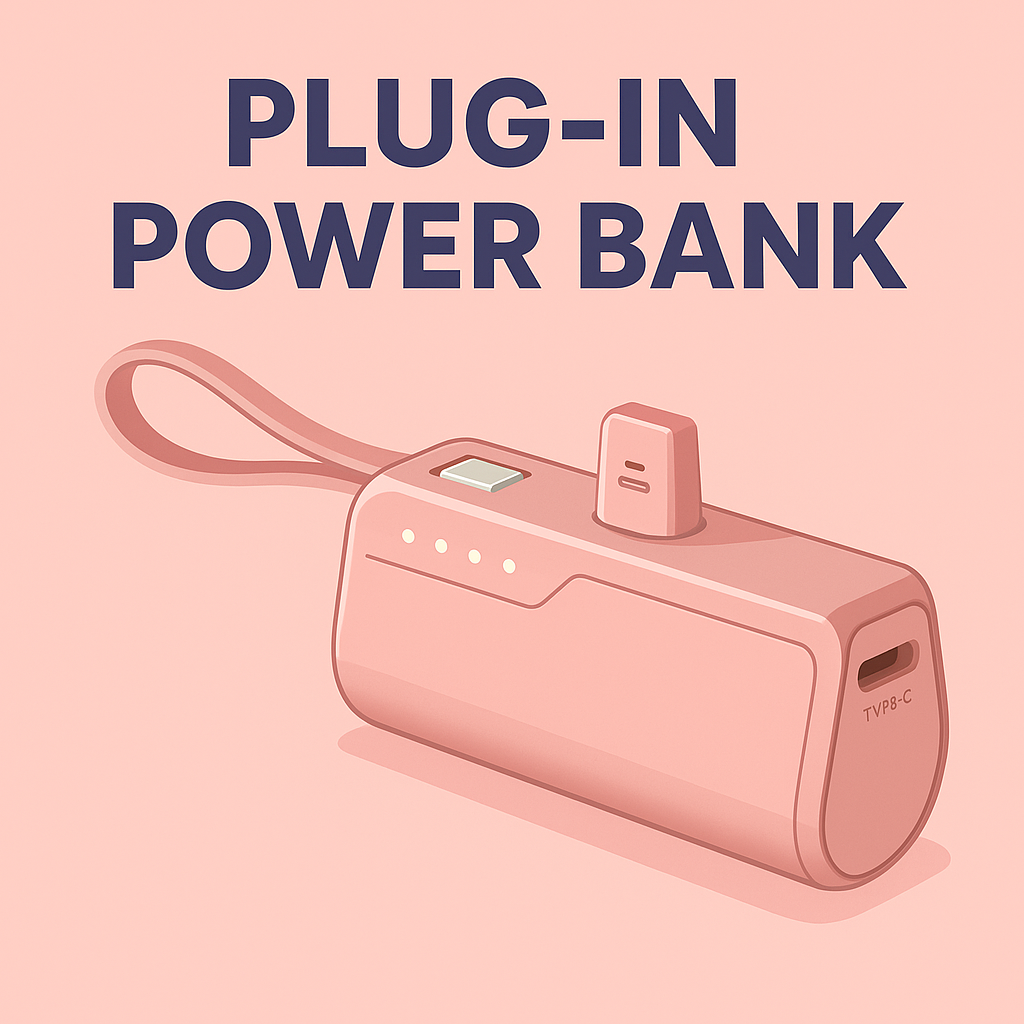
Plug-in mini power banks are one of the fastest growing categories in the mobile charging world. Instead of using a cable, these compact devices connect directly to the phone’s charging port. They are popular with travelers, commuters, and heavy smartphone users who want a light, ultra-portable power source. At the same time, many people are asking an important question: are these tiny power banks really safe for long-term use and battery health?
1. What makes built-in plug power banks different from normal power banks?
A traditional power bank usually requires a separate cable. A built-in plug power bank, also called a mini plug-in power bank or plug-in charger, has a USB-C or Lightning connector integrated into the body. You simply plug the power bank directly into the phone and charging begins. This design removes cable clutter and makes it easier to charge on the go.
Common capacities for these devices include 3000mAh, 4500mAh, and 5000mAh. They are not meant to replace a large 20000mAh power bank, but rather to provide quick top-up power during the day. For many users, a 5000mAh plug-in power bank is enough to get through a long meeting, a city trip, or an unexpected low battery moment.
Connects straight to the phone’s USB-C or Lightning port without a cable.
Compact enough to fit alongside your phone in one hand or small bag.
Ideal for emergency charging instead of full-day power supply.
2. Are plug-in power banks safe for smartphones?
When designed correctly, built-in plug power banks are as safe as normal power banks. A high quality mini power bank includes overcharge protection, short-circuit protection, temperature monitoring, and stable voltage output. These protections are managed by an internal control chip that regulates how power is delivered to the smartphone battery.
Safety concerns arise mainly with very cheap plug-in chargers that use low grade lithium cells, unstable circuitry, and weak connectors. If the built-in plug is loose or wobbles inside the phone’s port, it can cause intermittent charging and physical stress on the connector. Poor design can also lead to irregular output voltage, which may shorten the lifespan of the phone battery over time.
As a rule of thumb, a built-in plug power bank that stays cool, feels solid when plugged in, and charges steadily is usually designed with better safety margins.
3. Why heat is the most important factor for safety and lifespan
Heat is one of the main enemies of lithium battery health. Since plug-in power banks sit directly against the phone, some users worry that they might cause the device to heat up more than a normal power bank and cable. In reality, the temperature depends far more on the efficiency of the electronics inside the charger than on its shape.
Premium plug-in power banks use efficient charging circuits, real capacity lithium polymer cells, and thermal control to keep heat under control. When a 5000mAh plug-in power bank is built properly, it should not feel significantly hotter than a traditional cable-based charger during normal use. Cheaper units, however, may run hot because energy is wasted inside the circuit instead of being delivered to the phone battery.
4. How plug-in power banks protect phone battery health
A good built-in plug power bank includes a regulated charging chip that controls both voltage and current. This prevents overcharging, voltage spikes, and harsh current fluctuations. Stable power delivery reduces stress on the smartphone battery and helps preserve long-term capacity.
Many modern models are designed to work with USB-C charging standards, offering stable 5 V or 9 V output levels. While they may not always support the highest level of USB-C PD fast charging, they still deliver a controlled and safe charging profile. In many cases, using a stable mini power bank is safer than plugging into an unknown wall adapter or low quality public charger.
- Stable connector and firm fit
- Smooth, consistent charging curve
- Moderate temperature during use
- Loose connector and movement
- Frequent power interruptions
- Noticeable heat and sharp battery drop
5. How to choose a safe and reliable plug-in mini power bank
Customers who want to use plug-in power banks safely should focus on a few clear criteria. First, check the capacity. Realistic numbers such as 3000mAh, 4500mAh, or 5000mAh are usually more trustworthy than extremely small devices claiming very high capacities. Second, look for clear technical specifications and safety information from the brand.
Other practical tips include looking for a solid connector that does not wobble inside the phone port, visible protection icons such as overcharge and temperature protection, and a stable charging experience with no sudden drops or disconnections. User reviews can also reveal whether a plug-in power bank works smoothly over time.
Related search terms: plug-in power bank, mini plug power bank, built-in plug charger, 5000mAh mini power bank, portable phone charger.
Conclusion
Built-in plug power banks combine convenience and portability in a way that traditional power banks cannot match. When they are built with high quality lithium cells, stable electronics, and a strong connector, they can be just as safe as larger power banks. The key is to avoid ultra-cheap, poorly documented products and to choose well engineered designs instead.
For users who need a quick, pocket-size backup for emergencies, a reliable plug-in mini power bank can be an excellent companion that keeps the smartphone battery healthy and ready throughout the day.
Explore compact plug-in power banks, USB-C chargers, and OEM smartphone battery solutions designed for real-world safety and performance at www.janonpowerbank.com .